Where Are the Dead?
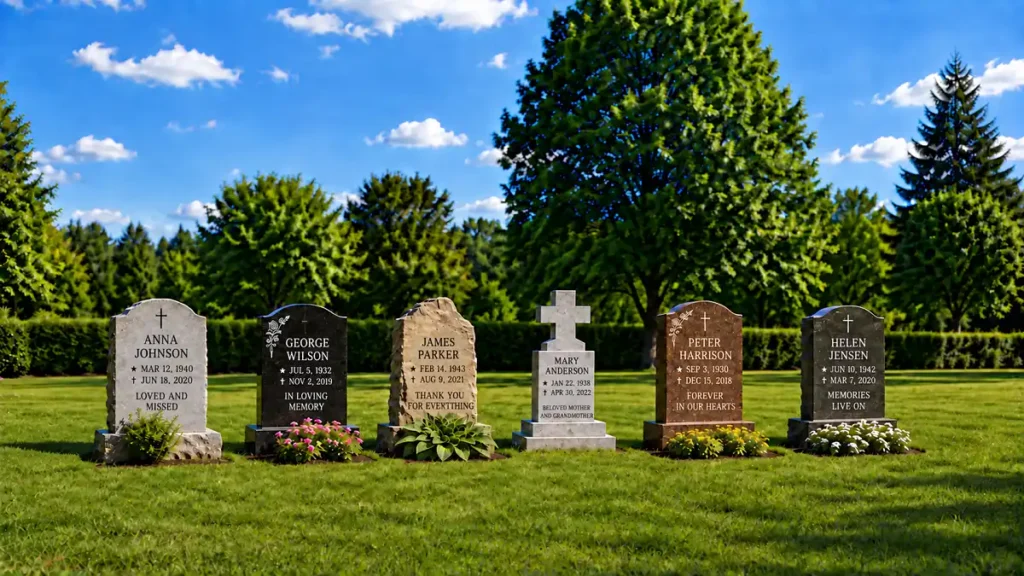
Perhaps you have experienced the emptiness and sense of loss that come when someone you love dies. In such a situation, most people feel not only overwhelmed by grief but also helpless. It is only natural, then, to ask: Where are the dead? What happens to a human being when he dies? Is he still conscious somewhere? Is there a trustworthy hope that the dead will live again?
To answer the question “Where are the dead?” we must examine what the Bible says about death, the realm of the dead, and the resurrection. The Bible provides a comforting answer to these questions.
Death, simply stated, is the opposite of life. In the judgment God pronounced upon the first man, Adam, because of his deliberate disobedience, God said:
“For out of the ground you were taken; for you are dust, and to dust you shall return.” (Genesis 3:19, Interlinear Bible)
Consider this: Where was Adam before God formed him from the ground and gave him life? Was he in heaven? Or perhaps somewhere else? No, he simply did not exist. At death, Adam returned to the same lifeless, unconscious state from which he came. He simply died—just as God had said he would. We read in Genesis 2:17:
“But of the tree of the knowledge of good and evil you may not eat, for in the day that you eat of it, you shall surely die.” (Interlinear Bible)
God did not say that Adam would go to heaven or to hell. He said that Adam would die and return to the dust of the ground from which he came.
The Dead Know Nothing
Adam ate and violated God’s command, and therefore he had to die. Adam’s decline began the moment God sentenced him to death. From God, Adam had received the ability to reproduce his own kind. He himself had been created in God’s image (Genesis 1:27), but now he had lost all right to life and therefore could not pass that right on to his descendants. His offspring were therefore born subject to death.
The life force that God had given Adam was so strong that it took 930 years before it completely ceased. Adam returned to the dust of the ground after he had lived for 930 years. He lost his life and his consciousness.
The Bible clearly teaches that the dead are unconscious. The dead know nothing and are unable to think, feel, or act. Notice what Ecclesiastes 9:5, 10 says about the condition of the dead:
“For the living know that they shall die; but the dead know nothing; and they have no more reward, for the memory of them is forgotten… All that your hand finds to do, do it with your strength. For there is no work, or planning, or knowledge, or wisdom, in Sheol, there where you go.” (Interlinear Bible)
This means that the dead can neither do anything nor feel anything. Their thoughts cease on the day they die. As the Bible says:
“Put not your trust in princes, in a son of man, for there is no salvation in him. His breath will go out, he returns to the earth; his thoughts perish in that day.” (Psalm 146:3–4, Interlinear Bible)
In the realm of the dead, where humans go, there is silence:
“The dead do not praise Yahweh, nor all those who go down into silence.” (Psalm 115:17, Interlinear Bible)
What Is the Spirit?
The Bible teaches that there are two things that a human being (or any other conscious earthly creature) must have in order to be alive and remain alive: spirit and breath. We read in the book of Job:
“If he (God) should set his heart upon man, if he should gather to himself his spirit (Hebrew: ruach) and his breath (Hebrew: neshamah), all flesh would expire together, and man would return to the dust.” (Job 34:14–15, Interlinear Bible)
We know that God formed the first man from the “ground,” that is, from the elements of the earth. When Adam was created, God gave life to the billions of cells in his body and filled them with life force. It is this active life force that is here referred to by the word “spirit” (ruach). But for the life force to continue in each of Adam’s billions of cells, the cells needed oxygen, which breathing would provide. That is why God then “blew the breath of life (neshamah) into his nostrils” (Genesis 2:7). Adam’s lungs then began to function, and through breathing they sustained the life of the cells in his body.
This can be compared with what sometimes happens with newborn babies. Although the baby is alive when it is born, it sometimes does not begin breathing properly after birth. The midwife may then need to stimulate the baby to start breathing, because without breathing the baby would soon die. In the same way, the life in Adam’s cells had to be sustained by breathing if Adam was to remain a living human being.
While the human soul is the living person himself, the spirit is simply the life force that gives the person life. The spirit has no personality, nor can it do the things that a person can do. It cannot think, speak, hear, see, or feel. In this respect, it can be compared to the electric current from a car battery. The current can ignite the fuel that enables the engine to produce power; it can make the lights shine, the horn sound, or the car radio produce speech and music. But could the current from the battery do any of these things by itself—that is, without the engine, the lights, the horn, or the radio? No, because it is simply the power that enables the various components to function and do what they are designed to do.
This spirit, or life force, which comes from God, is found in all his living creatures, with parents passing it on to their offspring at conception. That is why God could tell Noah that he would bring a flood to “destroy all flesh under the heavens in which is the spirit of life” (Genesis 6:17). Since both humans and animals have the same life force, or spirit, they die in the same way. That is why Ecclesiastes 3:19–20 says:
“For what happens to the sons of men and what happens to the animals is the same event for them. As the one dies, so dies the other. They all have one spirit; and man has no advantage over the animal, for all is vanity. All go to one place; all came from the dust, and all return to the dust.” (Interlinear Bible)
The Spirit Returns to God
The fate of humans and the fate of animals are one and the same. They all came from the dust, and they all return to the dust:
“And the dust returns to the earth as it was, and the spirit returns to God who gave it.” (Ecclesiastes 12:7, Interlinear Bible)
But how should we understand the statement that the spirit “returns to God who gave it”? Does the life force literally leave the earth and travel through space to the place where God is?
When we consider the overall testimony of Scripture concerning the condition of the dead, together with the fact that humans have no advantage over the animals, such a conclusion does not seem logical. If the spirit were a conscious part of a human being that continued to live after death, this would directly contradict the many passages stating that the dead know nothing at all and that their thoughts have ceased.
No, the spirit returns to God in the sense that the person’s possibility of future life is now entirely in God’s hands. Only God can give the spirit again and restore the person to life; no one else can.
It can be compared to a lamp that goes out when the electric current is cut off. The light does not go somewhere else; it simply ceases. But if the current is restored, the lamp shines again. In the same way, a person’s life ceases when the life force no longer operates in the body. If life is to be restored, it must come from God, who is “the fountain of life” (Psalm 36:9).
That is why the Bible consistently presents the resurrection as the hope for the dead. If the dead were already living on as conscious persons somewhere else, there would be no need for a resurrection. But because life has ceased, God must restore it. Therefore, the hope for the dead does not rest on an immortal part of the human being, but on God’s ability and willingness to raise the dead to life again.
The Dead Cannot Affect the Living
At death, the life force eventually leaves all the cells of the body, and the body begins to decompose. All thought, consciousness, and activity cease.
“You hide your face, and they are troubled; you take away their breath, and they expire and return to their dust.” (Psalm 104:29, Interlinear Bible)
Since the dead are unconscious, they cannot affect the living. They can neither help nor harm anyone. Therefore, we do not need to fear the dead or believe that they can in any way intervene in our lives.
Some people live in fear of the dead and make offerings in an attempt to appease deceased ancestors. We can, however, find comfort in knowing that since the dead are unconscious, they cannot harm the living. God’s Word also shows that people whom we may have loved dearly and who are now dead cannot be helped by having religious rites or ceremonies performed for them, practices that may cost the surviving family members a great deal of money (2 Samuel 12:21).
Knowing the true condition of the dead also protects us from being misled into trying to communicate with them. The Bible directly warns against seeking contact with the dead (Deuteronomy 18:10–12). Since, according to Scripture, the dead are unconscious, any such claimed contact cannot come from the dead themselves.
The Realm of the Dead—Sheol
In the Hebrew Scriptures, the word Sheol occurs 65 times. In the Greek Scriptures, the corresponding word is Hades. Both terms are commonly associated with the realm of the dead.
Is Sheol or Hades a place where the dead experience bliss or suffering? The answer is clear, for we have already seen that the dead are unconscious and therefore cannot feel anything. The Bible does not contradict itself when it speaks about the condition of the dead in the realm of the dead. This is evident from the fact that the Bible says that Jesus was in Hades (Acts 2:31).
When the apostle Peter said this on the day of Pentecost, he clearly meant that Jesus had been in the grave, not in a place where he was suffering. Peter was quoting from Psalm 16:10. There the Hebrew word Sheol is used, while in Acts 2:31 it is rendered by the Greek word Hades. This shows that Sheol and Hades have the same meaning and that both words refer to the realm of the dead.
Are Sheol and Hades places where humans suffer? No, and evidence of this can be seen in the case of Job, one of God’s righteous servants, who suffered greatly. He prayed to God:
“Who will grant that you would hide me in Sheol; You would conceal me until your anger turns back; that you would set a limit for me and remember me.” (Job 14:13, Interlinear Bible)
Would it not be unreasonable to believe that Job wanted to be hidden in Sheol (the realm of the dead) if it were a place where he would suffer? Is it not more reasonable to understand the realm of the dead simply as the grave, where Job wished to be laid so that his many sufferings would come to an end?
Both good and wicked people go to Sheol, the Bible’s term for the realm of the dead.
Scriptures Containing the Word Sheol
Let us look at some of the passages where the word Sheol is used.
“As the clouds fade and vanish, so he who goes down to Sheol shall not come up.” (Job 7:9, Interlinear Bible)
The one who goes down to Sheol (the realm of the dead) cannot come up by his own power, but God can raise the dead from the grave.
“The wicked shall return to Sheol, all the nations that forget God.” (Psalm 9:17, Interlinear Bible)
An interesting detail here is that Scripture says that the wicked will “return to Sheol.” Normally, one cannot return to something unless one has been there before. The expression therefore harmonizes well with the Bible’s teaching about the resurrection and the coming judgment.
“Yahweh, you have brought up my soul from Sheol; you have kept me alive, that I should not go down to the pit.” (Psalm 30:3, Interlinear Bible)
“My son, if sinners entice you, do not consent. If they say: Come with us, let us lie in wait for blood; let us hide ourselves for the innocent without cause; let us swallow them alive like Sheol, and whole, like those who go down to the pit.” (Proverbs 1:10–12, Interlinear Bible)
“For Sheol cannot thank you; death cannot praise you; those who go down to the pit cannot hope for your truth.” (Isaiah 38:18, Interlinear Bible)
These passages show that Sheol is not described as a place of conscious life, but as the realm of the dead, where the dead rest without consciousness.
Scriptures Containing the Word Hades
Let us look at some of the passages where the word Hades is used.
The Greek word Hades corresponds to the Hebrew word Sheol and is used in the Greek Scriptures. This can be seen when the apostles quote passages from the Hebrew Scriptures and render Sheol as Hades:
“For you will not leave my soul in Hades, nor will you allow your Holy One to see corruption.” (Acts 2:27, Interlinear Bible)
This passage is quoted from Psalm 16:10:
“For you will not leave my soul in Sheol; you will not allow your Holy One to see corruption.” (Interlinear Bible)
“O death, where is your sting? Hades, where is your victory?” (1 Corinthians 15:55, Interlinear Bible)
This passage is quoted from Hosea 13:14:
“O death, where are your plagues? O Sheol, where is your destruction?” (Interlinear Bible)
These examples show that the Hebrew word Sheol corresponds to the Greek word Hades. Both words refer to the realm of the dead.
Will the Dead Live Again?
What the Bible teaches about the true condition of the dead frees us from much unnecessary fear and anxiety concerning them. Knowing that they are not suffering helps us to understand and appreciate God’s love and justice much more fully.
But other questions arise. When a human being dies and simply enters the realm of the dead, what hope is there for the dead? The Bible shows that there is a wonderful hope for the dead—the hope that they will live again.
When Jesus Christ preached on earth, he showed the people the power he had over death by bringing the dead back to life (Matthew 9:18–26; Luke 7:11–17; John 11:39–44). In this way, he gave us a foretaste of what he will do on a far greater scale when he returns to the earth.
Jesus is the one who has the keys of Hades and death:
“I was dead, but behold, I am living forever and ever. Amen. And I have the keys of Hades and of death.” (Revelation 1:18, Interlinear Bible)
“Do not marvel at this, for an hour is coming in which all those in the tombs will hear his voice. And they will come out, the ones having done good into a resurrection of life; and the ones having practiced evil into a resurrection of judgment.” (John 5:28–29, Interlinear Bible)
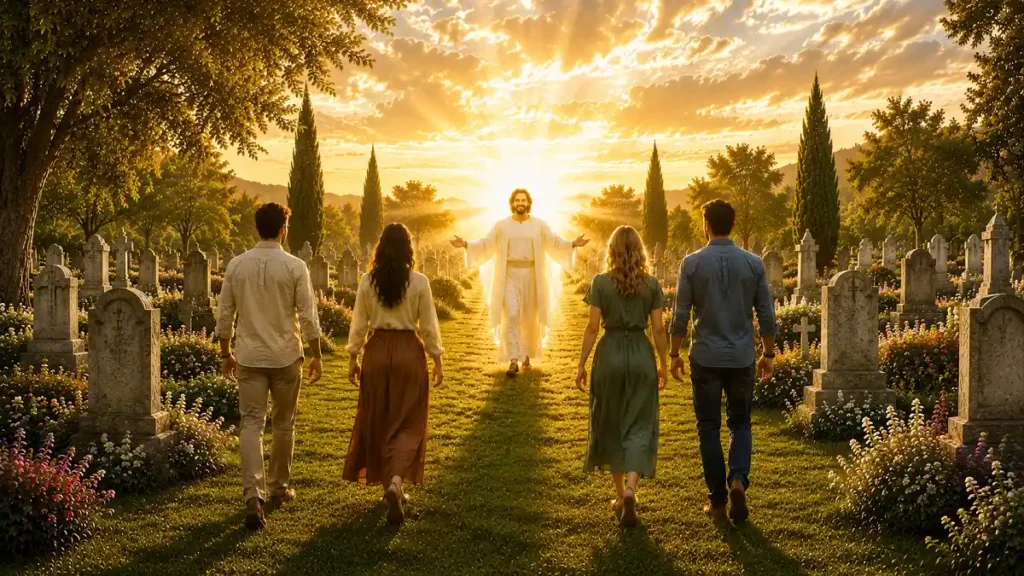
It fills the heart with joy to know that Jesus has the keys of Hades and that all those in the realm of the dead will one day hear his voice and come forth. All the dead—who have been there without consciousness—will be raised.
Many will receive a resurrection like the one Jesus Christ received. But the majority of mankind will return to life and live in a restored earthly paradise, where death will be no more, neither will there be mourning, crying, or pain, for the former things will have passed away (Revelation 21:3–4).
If humans then choose to follow God’s righteous laws, they will never need to die again. The unrighteous who refuse to repent will not be permitted to live in the restored paradise. The Bible says that they will “return to Sheol” (Psalm 9:17).
The Bible presents some wonderful promises for mankind. It therefore gives us good reason to come to know Yahweh and his Son, Jesus Christ, better.
We have now seen that the question “Where are the dead?” is answered, not by speculation or tradition, but by the Bible’s teaching about the realm of the dead and the resurrection.
“And this is eternal life, that they may know you, the only true God, and Jesus Christ whom you have sent.” (John 17:3, Interlinear Bible)
Related Articles
Explore More
© 2026 Skriften.dk