What Did Confucius Teach?
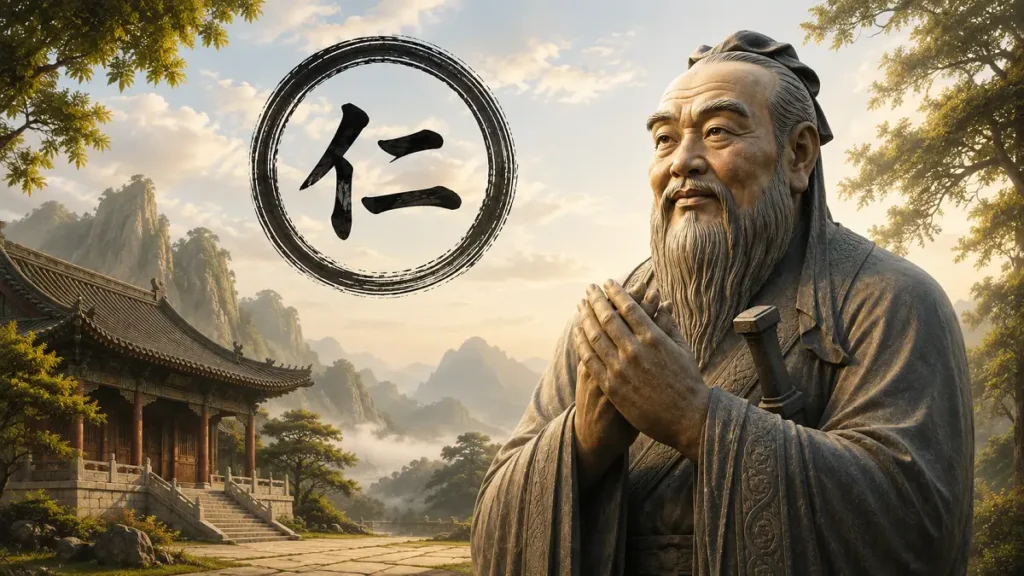
Confucius was a Chinese philosopher, teacher, and moral thinker whose teachings have influenced Chinese culture and society for more than 2,500 years. His ideas became the foundation of Confucianism, which has had a major influence in China, Korea, Japan, Vietnam, and other parts of East Asia.
Short Answer: Confucius taught that a good and harmonious society begins with the character of the individual. He emphasized morality, respect for parents and family, education, self-discipline, responsibility, and treating others with consideration. His teachings were primarily concerned with how people should live rather than with God, salvation, or life after death.
Instead, it emphasizes morality, respect, family, education, and responsibility toward others. Its goal is to create a harmonious society in which people live by good values and fulfill their duties with wisdom and integrity.
Confucianism is often described as a philosophy or an ethical system, but throughout history it has also had religious significance. For centuries, Confucius was honored in temples, and his teachings came to influence both government and everyday life.
In this article, we will examine the life of Confucius, the writings of Confucianism, its main teachings, and its view of humanity and society. Finally, we will consider whether the teachings of Confucius agree with the message of the Bible.
Who Was Confucius?
Confucius was born in 551 BC in the state of Lu, located in what is now China. His Chinese name was Kong Qiu, but in the West he became known as Confucius, a Latinized form of his name.
He grew up in modest circumstances and held various government positions in his younger years. Over time, he became known as a teacher and adviser and gathered a group of disciples around him. His goal was to restore morality, order, and justice in society through education and personal development.
Confucius believed that a good society begins with the individual. He therefore placed great emphasis on virtues such as honesty, respect, self-discipline, and concern for others. He also taught the importance of honoring one’s parents and other family members, since he regarded the family as the foundation of a well-functioning society.
Confucius never regarded himself as a god or a prophet. He saw himself as a teacher who passed on the wisdom he believed could be found among the sages of the past. He died in 479 BC, but his teachings were preserved by his disciples and went on to influence Chinese culture and thought for thousands of years.
The Writings of Confucianism
Confucius did not write a single book setting out his teachings. His teachings were initially passed down orally and were later recorded and compiled by his followers. Confucianism therefore draws on a collection of texts that developed over several centuries.
The most important writings are known as the Four Books and Five Classics. For centuries, they formed the foundation of education, government administration, and morality in China.
The best known of the Four Books is the Analects, which contains sayings attributed to Confucius, conversations, and short accounts of his life and teachings. It contains many of the sayings and principles for which Confucianism is known.
The Five Classics are a collection of older Chinese texts dealing with subjects such as history, poetry, rituals, and morality. Confucius placed great importance on these writings and used them in his teaching. Together with the Four Books, they form the foundation of the Confucian tradition.
Although these writings are still read and studied today, they are not regarded as divine revelation. Instead, they are viewed as human wisdom and guidance on how to live a good life and create a harmonious society.
What Did Confucius Teach?
Confucius wanted to create a society characterized by peace, order, and justice. He believed that this could not be achieved primarily through laws and punishment, but by people developing good character and living according to high moral ideals.
The Golden Rule
One of Confucius’ best-known teachings is the Golden Rule:
“What you do not wish others to do to you, do not do to them.”
This principle encourages people to show consideration and treat others with respect by first considering how they themselves would want to be treated.
Morality and Virtue
Confucius placed great emphasis on personal morality. He believed that a person should develop virtues such as honesty, justice, faithfulness, self-discipline, and compassion. When individuals live morally, both the family and society are strengthened.
The Family as the Foundation of Society
The family occupies a central place in Confucianism. Confucius taught that children should respect their parents and that all family members have a responsibility to care for one another. He believed that a society can function well only when families are built on respect, responsibility, and good relationships.
Education and Personal Development
Confucius believed that everyone should strive for wisdom and personal development. Through learning, self-discipline, and good actions, individuals can develop their character and become examples to others. Education and learning therefore came to occupy a central place in the Confucian tradition.
How Do Confucians Practice Their Beliefs?
Confucianism is expressed primarily in the way people live their lives. The goal is to develop good character, show respect for others, and contribute to a harmonious society. For this reason, great emphasis is placed on daily conduct rather than on religious rituals.
Respect for the Family
A fundamental ideal in Confucianism is respect for the family. Children are expected to honor and care for their parents, and older family members are treated with respect. This care and loyalty are regarded as the foundation of a well-functioning society.
Responsibility and Duty
Confucius taught that every person has responsibilities toward both family and society. Rulers should govern justly, officials should be honest, and everyone should carry out their duties conscientiously. When each person acts responsibly, order and stability are created.
Education and Self-Discipline
Learning and personal development play a central role in Confucianism. Many Confucians view study, self-discipline, and reflection as lifelong pursuits. The goal is to continually develop one’s character and become a better person.
Ceremonies and Traditions
Although Confucianism places the greatest emphasis on morality and conduct, ceremonies also have an important place. In many East Asian cultures, respect for ancestors continues to be expressed through memorial ceremonies and traditional rituals. There are also temples where Confucius is honored as the great teacher and where his life and teachings are commemorated in special ceremonies.
Who Is God According to Confucianism?
Confucianism is not based on belief in a personal Creator God. Confucius was primarily concerned with how people should live, and he regarded himself as a teacher, not as a god or prophet.
Nevertheless, throughout history Confucius has come to occupy a special place in the religious lives of many people. After his death, temples were built in his honor, where people for centuries offered gifts such as fruit, wine, and incense. In many places, ceremonies have also been held to show respect for Confucius and his teachings.
Confucianism also places great emphasis on respect for ancestors. In many families, deceased relatives are remembered through special ceremonies and symbolic offerings are made as expressions of gratitude and honor.
Although Confucianism recognizes the concept of Heaven as the highest moral authority, it does not teach that Heaven is a personal God who created the world, reveals himself to mankind, or offers salvation. Confucianism therefore differs fundamentally from the Bible, which presents God as the Creator of heaven and earth and as one who desires a relationship with mankind.
Confucius and the Bible
Confucius wanted to create a society characterized by morality, order, and respect. The Bible also places great emphasis on truth, justice, and love for one’s neighbor. In several respects, therefore, the teachings of Confucius contain values that are also found in the Bible. Nevertheless, there are fundamental differences between Confucianism and what the Bible teaches.
Confucianism teaches that people should develop their character through self-discipline, education, and good actions. The Bible, however, teaches that mankind’s fundamental problem is sin, which separates us from God. Human beings therefore need, above all, God’s forgiveness and salvation through Jesus Christ.
Confucius placed great emphasis on the Golden Rule:
“What you do not wish others to do to you, do not do to them.”
Jesus expressed the Golden Rule positively:
“Therefore, whatever you want men to do to you, do also to them.” (Matthew 7:12, NKJV)
The Bible does not merely encourage us to refrain from doing harm but calls us actively to do good to others.
Confucianism is also not based on belief in a personal Creator God or on the hope of salvation and resurrection. The Bible, by contrast, teaches that God created mankind, desires a relationship with us, and offers eternal life through Jesus Christ.
The teachings of Confucius have had a profound influence on millions of people and have helped shape societies through their emphasis on morality, responsibility, and respect. But according to the Bible, human wisdom cannot replace divine revelation or lead people to salvation.
The Bible therefore encourages us to test every teaching and personally examine what God has revealed through his Word.
Conclusion
Confucius wanted to create a society characterized by morality, responsibility, and respect. His teachings have had a profound influence on Chinese culture and have affected millions of people for more than 2,500 years.
The Bible, however, gives a different answer to mankind’s greatest need. It teaches that mankind’s fundamental problem is sin and that our hope is found not in human morality or wisdom but in God’s salvation through Jesus Christ. The Bible’s message is that eternal life is a gift from God to those who believe in Jesus Christ and live in obedience to God.
It is therefore important not simply to base one’s faith on human wisdom and human traditions, but to examine for oneself what the Bible says. Only by testing every teaching against Scripture can we determine what is true.
Related Articles
Explore More
© 2026 Skriften.dk