What Does Hinduism Teach?
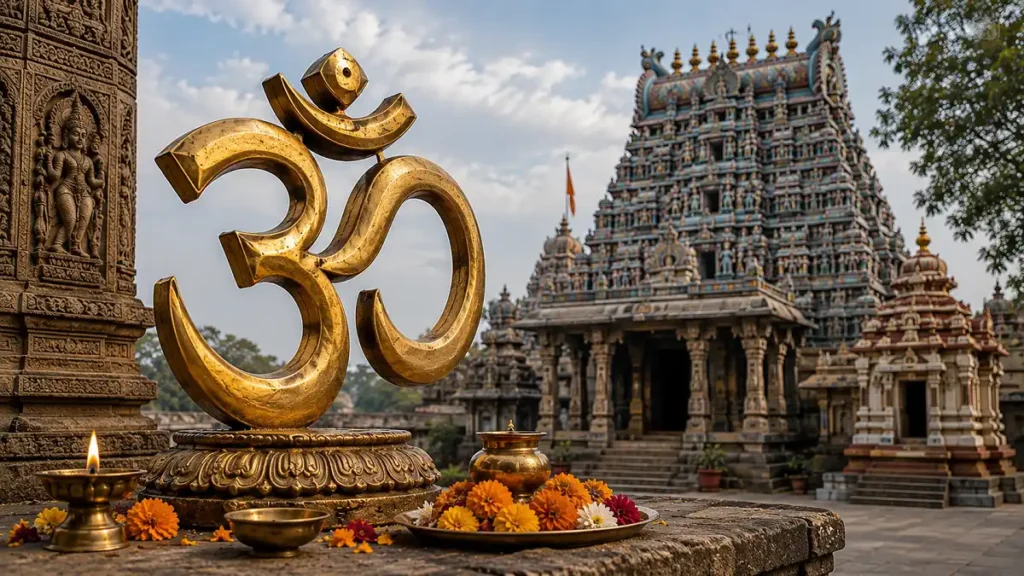
Hinduism is one of the world’s oldest religions and has more than one billion followers. It includes many different traditions and schools of thought and has developed over thousands of years, primarily on the Indian subcontinent.
Short Answer: Hinduism teaches concepts such as Brahman, Atman, karma, reincarnation, and moksha. Although Hindu traditions differ considerably, many teach that human beings pass through repeated cycles of birth, death, and rebirth until they attain liberation from this cycle.
What are the Vedas? What are karma and reincarnation, and what hope does Hinduism offer for the future? Even more important is the question: Do the teachings of Hinduism agree with what the Bible teaches?
In this article, we will examine the central teachings of Hinduism and compare them with the Bible. The purpose is not to criticize people, but to examine these teachings in the light of Scripture and allow the Bible to be the final authority.
What Is Hinduism?
Hinduism originated in India thousands of years ago and is considered one of the world’s oldest religions. Unlike Christianity, Islam, and Judaism, Hinduism has no single founder or common creed. The religion developed over a long period of history and includes many different traditions that differ from one another in several respects.
Despite this diversity, most traditions draw on the same ancient sacred texts and share a number of basic ideas about God, human beings, and the origin of the world. For this reason, Hinduism is often spoken of as one religion, even though it contains considerable diversity.
The most important sacred texts are known as the Vedas. The word Veda means “knowledge” or “sacred knowledge.” Hindus regard these writings as divinely revealed, and they have played a major role in the development of Hindu belief and practice for thousands of years.
The Vedas consist of four collections: the Rigveda, Samaveda, Yajurveda, and Atharvaveda. They contain hymns, prayers, praises, and texts connected with religious rituals and sacrifices.
Later, numerous commentaries and explanations of the Vedas were written to elaborate on their content and meaning.
The Vedic tradition forms the foundation for many of Hinduism’s most important teachings, including its views of divine reality, human beings, karma, and reincarnation. To understand what Hinduism teaches, it is therefore necessary first to consider these writings.
Who Is God According to Hinduism?
Hinduism includes many different gods, but behind this diversity lies the fundamental concept of Brahman. Brahman is understood as the eternal, all-encompassing reality—the divine principle from which everything originates and to which everything ultimately returns.
It is important to distinguish between Brahman and Brahma. Brahman refers to the ultimate reality, which is understood as impersonal in some Hindu traditions, while Brahma is the creator god and one of the deities within the Hindu pantheon. Brahma, however, plays a relatively limited role in Hindu religious life and is worshiped by comparatively few people.
According to some Hindu traditions, Brahma was born from a golden cosmic egg from which heaven and earth were formed. This account is one of several creation stories found in Hinduism and shows that the religion does not have a single explanation for the origin of the world.
Hinduism is often described as polytheistic because it includes a very large number of gods and goddesses. However, many Hindus understand these deities as different manifestations of the same ultimate reality, Brahman. Hinduism can therefore be described both as a religion with many deities and as a religion in which the many deities ultimately proceed from one divine reality.
This view is often described as pantheism because the divine is understood to be present throughout the universe. All life and the whole of creation are regarded as part of the same divine reality.
The Bible, by contrast, teaches that God is the Creator of heaven and earth and is distinct from his creation. He is not an impersonal force or identical with the universe, but a living and personal God who created all things and sustains them by his power. The biblical view of God therefore differs fundamentally from that of Hinduism.
What Does Hinduism Teach About Human Beings?
According to Hinduism, a human being is more than the physical body. Within every person is Atman, often described as the innermost soul or true self. Atman is regarded as eternal and immortal and therefore stands in sharp contrast to the body, which is only temporary.
The goal is to recognize one’s true nature. Many Hindus believe that Atman is ultimately one with Brahman, the highest reality. When this realization is attained, a person is liberated from the endless cycle of birth, death, and rebirth.
This view differs from the Bible’s teaching. The Bible does not describe human beings as part of God or as beings who must ultimately merge into a divine universal soul. Instead, the Bible teaches that human beings were created by God as distinct beings who are accountable to their Creator and called to live in fellowship with him.
Karma and Reincarnation
One of Hinduism’s central teachings is belief in karma and reincarnation. Karma describes the idea that a person’s actions have consequences not only in this life but also in future lives. A person’s present circumstances are therefore regarded as influenced by actions in previous lives, while choices made in this life help shape the next. Hindu sources describe samsara as the cycle of birth and rebirth and moksha as liberation from that cycle.
This understanding is closely connected with belief in reincarnation. According to Hinduism, human existence does not end at death. Atman is reborn again and again into a new existence. According to Hindu tradition, rebirth may take place as another human being, an animal, or—in some traditions—other forms of life.
This cycle of birth, death, and rebirth is called samsara. The goal is to be liberated from this endless cycle and attain moksha, in which a person is no longer reborn but reaches final union with Brahman.
The path to moksha is described differently within Hinduism. Some traditions emphasize knowledge and meditation, others devotion to a particular deity, and still others selfless actions or religious rituals. What they share is the belief that through many lives a person can gradually move toward final liberation from the cycle of reincarnation.
Hinduism therefore describes life as a long spiritual journey that may extend through countless rebirths. Liberation is attained through knowledge, religious practice, meditation, devotion, or other paths, depending on the Hindu tradition being followed.
The Bible teaches something very different. It does not describe human life as a series of repeated rebirths, but as one life in which each person is accountable to God. The biblical hope is not reincarnation, but resurrection from the dead and eternal life through Jesus Christ.
How Does a Hindu Live?
Hinduism is not only a system of beliefs but also a way of life that shapes everyday life. Many Hindus practice their faith through daily prayer, offerings, meditation, and participation in religious festivals. Religious practices vary from family to family and across Hindu traditions, but certain practices are widespread.
Puja
Puja is the most common form of worship in Hinduism. It may take place both at home and in temples, where flowers, incense, fruit, or lamps are presented as offerings to a deity. During puja, prayers and sacred texts are recited, and many Hindus seek the blessings of the gods in their daily lives.
Meditation and Yoga
Meditation plays an important role in many Hindu traditions. Its purpose is to attain inner peace, self-understanding, and a deeper awareness of spiritual reality.
Yoga was originally developed as a religious discipline intended to lead a person closer to ultimate liberation (moksha). In the West, yoga is often associated with physical exercise, but within Hinduism it has primarily had a spiritual purpose.
Pilgrimages
Many Hindus make pilgrimages to sacred places. The Ganges River in particular is regarded as sacred, and many believe that bathing in the river can cleanse a person of sins and improve one’s karma. The city of Varanasi is one of Hinduism’s most important pilgrimage destinations and is visited by millions of believers each year.
Festivals
Hinduism has many religious festivals. Among the best known are Diwali, the festival of lights, which symbolizes the victory of light over darkness, and Holi, the festival of colors, which marks the coming of spring and the victory of good over evil.
The festivals are often celebrated with prayers, processions, festive meals, and gatherings with family and friends.
Branches of Hinduism
Hinduism is not a single unified religion with one common creed. There are many different traditions that emphasize different deities and religious practices. Most, however, draw on the Vedic tradition and share belief in karma, reincarnation, and the goal of attaining moksha.
Vaishnavism
Vaishnavism is the largest tradition within Hinduism. Its followers worship Vishnu as the supreme deity and regard his various incarnations—especially Krishna and Rama—as particularly significant.
Shaivism
Shaivism regards Shiva as the supreme deity. Shiva is associated with both creation and destruction and plays a central role in the religious lives of many Hindus.
Shaktism
Shaktism emphasizes the worship of the divine mother, also known as Shakti or Devi. The goddess is understood as the divine power that permeates all creation and sustains life.
The Smarta Tradition
The Smarta tradition emphasizes that the various gods are different manifestations of the same divine reality, Brahman. Followers may therefore worship several deities without regarding them as separate ultimate gods.
Does Hinduism Agree with the Bible?
Hinduism and the Bible give very different answers to life’s major questions. They differ in their understanding of God, human beings, death, and the hope for the future.
Who Is God?
Hinduism teaches that the highest reality is Brahman and that the many gods may be understood as different manifestations of this divine reality.
The Bible, by contrast, teaches that God is the Creator of heaven and earth and is distinct from his creation. He is a living and personal God who desires fellowship with human beings.
What Happens After Death?
Hinduism teaches that a person is reborn again and again until liberation from the cycle of reincarnation is attained.
The Bible, by contrast, teaches that a person lives one life, after which he awaits the resurrection and God’s judgment. The hope is not reincarnation but resurrection to eternal life through Jesus Christ.
How Is a Person Saved?
According to Hinduism, final liberation is attained through many lives in which a person gradually approaches moksha through knowledge, meditation, devotion, or good works.
The Bible, by contrast, teaches that salvation cannot be earned through a person’s own works. It is a gift from God and is received through faith in Jesus Christ, who gave his life as a ransom for all people (Eph. 2:8–9; 1 Tim. 2:5–6).
What Does the Bible Say?
Hinduism’s fundamental teachings therefore cannot be reconciled with the teachings of the Bible. Although certain similarities can be found in ethical ideals, the two worldviews are based on different understandings of God, human beings, and the way to salvation.
The Bible points to Jesus Christ as the only Savior of the world and encourages everyone to test every teaching against Scripture (John 17:17; Acts 17:11). It is therefore important to examine the claims of Hinduism in the light of God’s word.
Conclusion
Hinduism is one of the world’s oldest religions and is based on the Vedic writings as well as belief in Brahman, karma, and reincarnation. At the same time, the religion includes many different traditions, each seeking in its own way to lead a person toward moksha—liberation from the cycle of rebirth.
The Bible presents a very different picture. It teaches that God is the Creator and is distinct from his creation, that a person lives one life, and that the hope for the future is found not in reincarnation but in resurrection and salvation through Jesus Christ.
For this reason, it is not enough simply to know what a religion teaches. The crucial question is whether its teachings agree with what God has revealed. The Bible encourages everyone to examine the Scriptures for themselves and test what they hear, so that their faith is based on truth rather than solely on human traditions or religious ideas (John 17:17; Acts 17:11).
If you would like to explore the teachings of the Bible further, you will find more articles on Skriften.dk examining key questions about God, Jesus Christ, salvation, and God’s purpose for mankind based on what the Bible itself says.
Related Articles
Explore More
© 2026 Skriften.dk