Who Is Jesus?
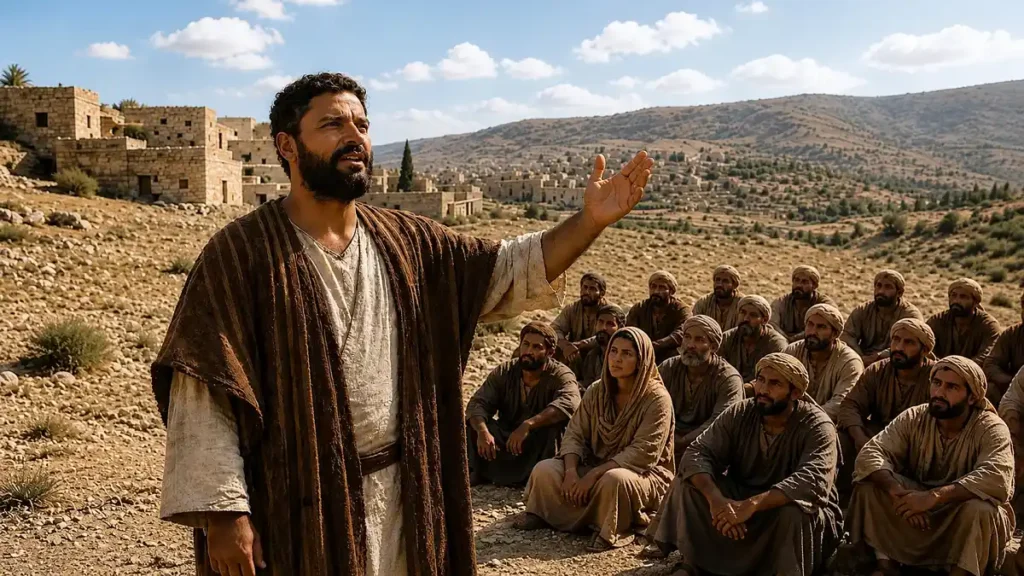
Jesus is the only-begotten Son of God and the promised Messiah. According to the Bible, he existed with God before becoming human and was sent to earth to do his Father’s will and to give his life as a ransom for mankind.
The Aramaic-speaking Jews called Him Yahshua Mashiach. The Greek-speaking Jews and Gentiles called Him Jesus Christ. In both languages, the name means “Jesus, the Anointed One.” The Hebrew name Yahshua means “Yahweh saves” or “Yahweh is salvation.” From the very beginning, His name reflected the role and purpose He was to fulfill.
That a Jewish man bearing this name and title lived and taught in Palestine two thousand years ago is a well-established historical fact that requires no further proof. His life and ministry are not only recorded in the apostolic writings but have also left a profound mark on history and on the minds of countless people.
In this article, we will examine the authentic account recorded by His personal companions and their close associates. By doing so, we will gain a deeper understanding of who He was. Jesus’ life and teachings have shaped the course of world history. Jesus will have an even greater impact on the world to come.
The Form of God
Before Jesus came to earth, He had already lived a glorious existence. In his letter to the believers in Philippi, Paul tells us something about Jesus’ life before He became a man. He writes:
“For let this mind be in you which also was in Christ Jesus, who subsisting in the form of God thought it not robbery to be equal with God, but emptied Himself, taking the form of a servant, having become in the likeness of men and being found in fashion as a man, He humbled Himself, having become obedient until death, even the death of a cross. Because of this also God highly exalted Him and gave Him a name above every name, that at the name of Jesus every knee should bow, of heavenly ones, and earthly ones, and ones under the earth—and every tongue should confess that Jesus Christ is Lord, to the glory of God the Father.” (Philippians 2:5–11, Interlinear Bible)
The person described here was not God Himself, but One who had the form of God. How can that be?
Jesus—God's Only-Begotten Son
He was a spirit, just as “God is spirit” (John 4:24). He was mighty, though not almighty as God is. He also existed before all the other sons of God, for He was the first Son whom God created or brought forth. He is “the only-begotten Son of God.” The apostle John states this clearly in John 3:16. He is called God’s only-begotten Son because God had no helper when He brought forth His firstborn Son. Jesus was the first among the sons of God.
He says of Himself in Revelation 3:14:
“These things says the Amen, the faithful and true Witness, the beginning of the creation of God.”
In Colossians 1:15 He is described as “the image of the invisible God, the firstborn of all creation.” In this way, He is placed among the sons of God and among God’s created beings as the first of them all. He is the most beloved and the most highly favored of them.
He is not the source of God’s creation. Rather, after God had created Him as His firstborn Son, He used Him as His workman. Through Him, God brought into existence all the other sons of God and the rest of creation. (Colossians 1:16–17; John 1:3; Proverbs 8:30)
Jesus as the Word (Logos)
In the first chapter of John’s Gospel, Jesus is called the Word of God. That is, He is God’s spokesman—the One who speaks on God’s behalf. In the Greek text, Word is Logos. Jesus may therefore rightly be called the Word, or the Logos.
Since He also existed before all other created beings, He was a god. But He was not God Almighty, who is Yahweh. All the sons of God are called “gods” by God Himself. (Psalm 82:6)
That Jesus is not the same person as God, Yahweh, is clearly seen in John 1:1–3:
“In the beginning was the Word, and the Word was with the God, and the Word was god. He was in the beginning with the God. All things came into being through Him, and without Him was not even one thing made that was made.” (John 1:1–3, Interlinear Bible)
Notice the distinction between “the God” and “god.” I have reproduced the text exactly as it appears in the Greek original.
The Logos therefore came into existence before the other sons of God. Jesus Christ Himself testifies in several places in the Scriptures that He existed before He became a man.
Jesus Existed Before Abraham
Passages such as John 6:62 and John 8:23, 58 clearly show that Jesus did not begin His existence as a man on earth.
“Then what if you see the Son of man going up where He was at first?” (John 6:62, Interlinear Bible)
“You are from below; I am from above. You are from this world; I am not from this world… Truly, truly, I say to you, I am before Abraham came into being.” (John 8:23, 58, Interlinear Bible)
When Jesus speaks of returning to the place where He was at first, He clearly points to His prehuman existence. The same is true when He says that He existed before Abraham.
John the Baptist was about six months older than Jesus (Luke 1:26–31). Yet John said of Him:
“John bears witness concerning Him and has cried out, saying, This was He of whom I said, He who comes after me has come before me, because He was before me.” (John 1:15, Interlinear Bible)
In His prayer, Jesus also speaks of the glory He had with God before the world existed:
“I have glorified You on the earth. I finished the work that You gave Me to do. And now Father, glorify Me with Yourself, with the glory which I had with You before the existence of the world.” (John 17:4–5, Interlinear Bible)
Taken together, these statements present a clear and consistent picture that Jesus had a prehuman existence with God. They also show that He had a conscious and personal existence before He came into the world as a man.
He Came Down to Earth
Before Jesus came to earth, He did not regard Himself as being equal with God the Father. He did not consider Himself equal in power and glory with God Almighty. On the contrary, He willingly submitted Himself to God as His superior and acknowledged His higher authority.
He humbled Himself under God’s almighty hand to the greatest possible extent, being willing to go all the way to a shameful death. This humility and obedience clearly reveal His attitude and His willingness to do God’s will rather than His own.
God’s only-begotten Son came down to earth, took the form of a servant, and became like men. He left His exalted heavenly position and entered the world of mankind to carry out the mission God had given Him. (Philippians 2:5–8)
Jesus once asked the Pharisees about the Messiah’s origin:
“What do you think about the Christ? Whose Son is He?”
The Pharisees had to identify the family line from which the Messiah would come. They replied:
“The son of David.” (Matthew 22:41–42)
And so it came to pass. When God’s Son came to earth, He was born into the line of David, just as the prophets had foretold. His mother, the virgin Mary, was a descendant of David, and Joseph, to whom she was betrothed, was likewise from David’s family. But before Mary came together with him, one of God’s angels announced to her that she would become the mother of God’s Son.
The Son of God
“And behold! You will conceive in your womb and bear a Son, and you will call His name Jesus… The Holy Spirit will come upon you, and the power of the Most High will overshadow you, and for this reason that Holy One being born of you will be called Son of God.” (Luke 1:31–35, Interlinear Bible)
The angel Gabriel said that Mary’s child would be called “the Son of God.” It is therefore unwarranted to call Mary “the Mother of God.” This title was adopted by later Christianity and was also used of one of the pagan goddesses, Rhea (Semiramis), who was worshiped as “the Mother of the gods.”
Jesus never called Mary the “Mother of God” or “Blessed Mother.” Instead, He addressed her as “woman.” (John 2:4; 19:26; Matthew 12:46–50) The apostle Paul likewise writes:
“But when the fullness of the time came, God sent forth His Son, having come into being from a woman.” (Galatians 4:4)
When the young virgin conceived through the power of the Most High, the life of God’s Son was transferred from heaven, and He began His human life in Mary’s womb.
Mary was in the town of Nazareth in Galilee when she became pregnant. But because of the emperor’s decree that everyone should be registered, she traveled to Bethlehem in Judea. It was there that King David had been born about eleven centuries earlier. This took place in fulfillment of the prophecy of Micah 5:2.
The angel proclaimed this message to the Jewish shepherds in the fields:
“Today a Savior, who is Christ the Lord, was born to you in the city of David… And suddenly there was with the angel a multitude of the heavenly host, praising God and saying, Glory to God in the highest, and peace on earth, good will among men.” (Luke 2:11–14, Interlinear Bible)
Jesus Proclaimed the Kingdom of God
On the eighth day, He was circumcised like every other Jewish boy. Forty days later, Mary took Him to the temple in Jerusalem to present Him before God. Later, the child was taken to Egypt to escape King Herod’s murderous soldiers. After Herod’s death, He returned and grew up in Nazareth. In this way, the prophecy was fulfilled:
“I called My son out of Egypt.” (Hosea 11:1)
Mary’s relative Elizabeth was married to a priest named Zechariah. She gave birth to a son, John. Shortly before Jesus reached the age of thirty, John began preaching as the forerunner of Jesus. As part of his ministry, he also baptized people in water. He preached exclusively to the Jews, saying: “Repent, for the kingdom of Heaven has drawn near.” (Matthew 3:2)
After this, Jesus came to John and revealed the purpose of His coming to earth. He had come to bear witness to the Kingdom of God and to make God’s will known among mankind.
Three and a half years later, when Jesus stood before the governor Pontius Pilate, He said:
“My kingdom is not of this world. If My kingdom were of this world, My servants would have fought that I might not be delivered up to the Jews. But now My kingdom is not from here.” (John 18:36, Interlinear Bible)
Received God's Holy Spirit
When Jesus was thirty years old, He went to John the Baptist to be baptized in water. After John had baptized Him in the Jordan River, Jesus came up out of the water, and heaven was opened. Then God’s Spirit descended upon Him in bodily form like a dove, and a voice came from heaven:
“You are My Son, the Beloved; I am delighted in You.” (Luke 3:21–23, Interlinear Bible)
By submitting to water baptism, Jesus showed that He was yielding Himself to God’s will. God then consecrated Him with His Holy Spirit. By acknowledging Jesus as His beloved Son, God begot Him anew as His spiritual Son rather than merely His human Son. By pouring out His Holy Spirit upon the baptized Jesus, God anointed Him with the Spirit to be King of God’s Kingdom.
When Jesus was anointed with the Spirit, He became the Messiah, or Christ, since both words mean “the Anointed One.” Thus He truly became Jesus Christ, or Jesus the Anointed One. The apostle Peter said: “God anointed Jesus of Nazareth with Holy Spirit and power.” (Acts 10:38)
After this, Jesus spent forty days in the wilderness, where He resisted the Devil’s temptations. He then returned to the region where John was ministering in order to meet His first disciples. When John saw Jesus, he said: “Behold, the Lamb of God, who takes away the sin of the world!” (John 1:29)
In this way, John revealed the primary purpose of God’s Son in coming to earth. It was to die as a holy sacrifice to God on behalf of mankind. His death would remove sin and deliver mankind from the sentence of death. Through faith in Jesus, people could receive everlasting life.
The Ransom Sacrifice
God’s Son, Jesus Christ, was fully qualified to serve as the ransom sacrifice. His perfect, sinless life had been transferred from heaven to the womb of the Jewish virgin. Therefore, He was born as a perfect human being. He grew up to become a perfect man—sinless, holy, and undefiled. (Hebrews 7:26)
God therefore accepted Him as the sacrifice so that He could become mankind’s Redeemer. Jesus willingly offered His human life and gave it up. In return, God granted Him a new, spiritual life through His Holy Spirit. From the very beginning, it was God’s purpose that Jesus should offer His body as a holy sacrifice. He was to give His life as a ransom for all mankind.
“Even as the Son of man did not come to be served, but to serve, and to give His life a ransom for many.” (Matthew 20:28, Interlinear Bible)
“For God is one, also there is one Mediator of God and of men, the Man Christ Jesus, the One having given Himself a ransom on behalf of all.” (1 Timothy 2:5–6, Interlinear Bible)
After His anointing, Jesus returned to Nazareth and spoke in the synagogue. He applied Isaiah’s prophecy to Himself and explained His mission. (Luke 4:16–21) He had been anointed with God’s Spirit to proclaim the good news. He was to bring freedom to those who were bound by sin and error. After this, He preached throughout Judea and Galilee: “The Kingdom of Heaven has drawn near.”
He Was Executed
Jesus gathered twelve apostles and many other disciples around Him and trained them to preach about the Kingdom of God. He Himself had been anointed to be King of that Kingdom and made it the central theme of His preaching. He exposed religious traditions and false teachings and proclaimed the truth in order to set people free from spiritual darkness. As a result, He came into sharp conflict with the rabbis, the priests, and the scribes, who sought to have Him put to death.
At Passover, they succeeded, with the help of the traitorous apostle Judas Iscariot, in having Jesus arrested. They then conducted a sham trial against Him and handed Him over to the Gentile authorities for interrogation. He was brought before Pontius Pilate and Herod Antipas, who were to decide His case. The religious leaders prevented His release by stirring up the misled Jewish people against Him.
The people were then incited to demand that Jesus be executed as a rebellious lawbreaker and a blasphemer. The charge against Him was that He had made Himself the Son of God, not God. (John 19:7)
Throughout it all, He remained obedient to God and held firmly to His faith until death.
Raised from the Dead
Three days after Jesus had been laid in the tomb, His immortal Father raised Him from the dead. He was not raised as a human being, but as a mighty and immortal heavenly spirit being, exalted above His former state.
God then gave Him all authority in heaven and on earth and appointed Him to an exalted position. The Jewish witnesses Peter and Paul say of this:
“Being put to death in the flesh, but made alive in the Spirit.” (1 Peter 3:18, Interlinear Bible)
“The last Adam became a life-giving Spirit.” (1 Corinthians 15:45, Interlinear Bible)
For forty days afterward, He appeared to His disciples in various human forms, just as the angels had done in earlier times. He did this to prove that He had truly been raised from the dead and to strengthen their faith. During this time, He also spoke with them about the Kingdom of God and prepared them for their mission as His witnesses. Then He ascended into heaven while they watched. (Acts 1:9)
Jesus entered into heaven itself as the great High Priest, appearing before God in heaven with the value of His sacrificed human life. (Hebrews 9:24) He applied this value for the benefit of all mankind, especially those who would put their faith in Him. God exalted His Son to a higher position than the one He had before His life as a man. (Ephesians 1:20–21)
If Jesus had been equal in power and glory with the Most High, God could not have exalted Him to an even higher position. But God has now made Jesus the Head of His Kingdom and has given Him unique authority.
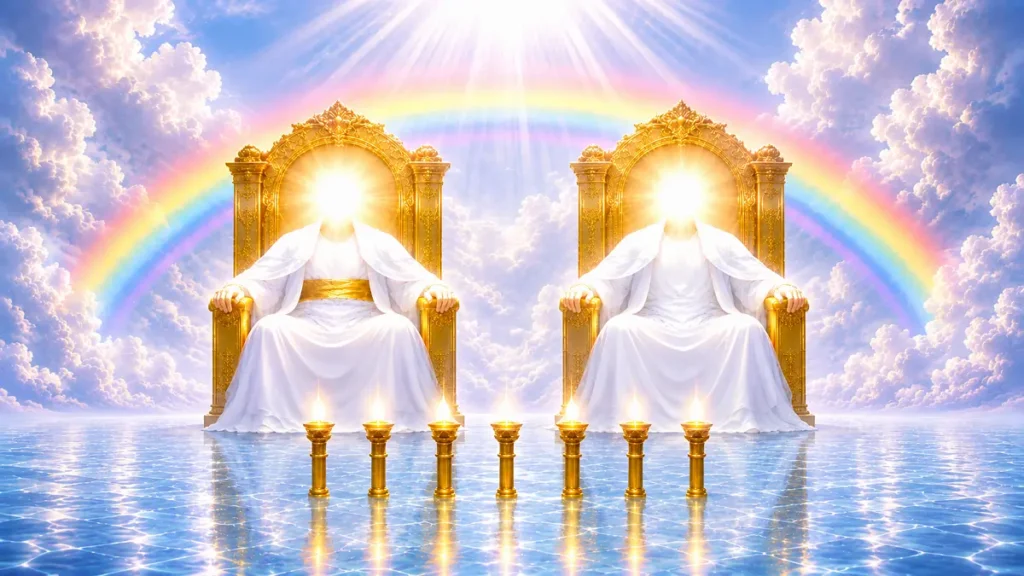
Jesus Sits at God's Right Hand
The apostle Peter writes:
“Jesus Christ; who going into Heaven is at the right of God, the angels, and authorities, and powers being subjected to Him.” (1 Peter 3:22, Interlinear Bible)
When Jesus entered heaven, He took His seat at God’s right hand, thus fulfilling the first part of Psalm 110:
“A statement of Yahweh to my Lord: Sit at My right hand, until I place Your enemies as Your footstool. Yahweh shall send the rod of Your strength out of Zion; rule in the midst of Your enemies.” (Psalm 110:1–2, Interlinear Bible)
Jesus did not take His human body of flesh and blood with Him into heaven when He was exalted. Had He done so, He would have remained forever lower than the angels, who are spirit beings. By becoming a man, He was made lower than the angels for a little while. (Hebrews 2:9)
It was never God’s purpose for Jesus to remain in that lower condition forever. After sacrificing His perfect human life, God raised Him to immortal life as a heavenly spirit being. God exalted Him above all others, making Him the highest next to God Himself.
In the future, Jesus will return to the earth to reign as King over the nations. He will then restore all the things that the prophets have spoken about. (Acts 3:21; Revelation 12:5; 19:15)
Jesus' Role in God's Purpose
Taken together, the Scriptures present a clear and consistent picture of Jesus.
He existed with God before His earthly birth and came to earth to carry out God’s will.
He lived a perfect life, proclaimed the Kingdom of God, and gave His life as a ransom for mankind’s sin.
After His death, He was raised from the dead and exalted to a higher position in heaven at God’s right hand.
He has been given authority over all things and now works for the benefit of those who put their faith in Him.
In the future, He will return as King and bring God’s purpose for the earth and mankind to its complete fulfillment.
It is therefore essential to understand who Jesus is and what role He has in God’s purpose. His life and ministry point the way to truth, freedom, and everlasting life for all who believe in Him.
Related Articles
Explore More
© 2026 Skriften.dk