Test Your Faith

Test your faith and examine what the Bible really teaches. We have good reason to put our faith to the test. Why? Scripture says that true worshipers must worship God in truth. Therefore, we should ask ourselves: Do I worship God in a way that He approves? God alone determines what He accepts. To know His will, we must turn to Scripture.
God shows us in His Word that it is important to speak and teach the truth about Him.
“And after Yahweh had spoken these words to Job, Yahweh said to Eliphaz the Temanite, My anger is kindled against you and your two friends, because you have not spoken what is right to Me, as My servant Job has.” (Job 42:7, Interlinear Bible)
It is also important to worship God in truth. These are the worshipers the Father seeks.
“But an hour is coming, and now is, when the true worshipers will worship the Father in spirit and in truth. For the Father also seeks such ones that worship Him. God is a spirit, and the ones worshiping Him must worship in spirit and truth.” (John 4:23–24, Interlinear Bible)
The Narrow Way
Many sincere people try to serve God as best they can. But what do we find when we examine what the Bible says about this subject? Does it teach that millions of people belonging to different religions all have God’s approval? Does it show that it does not matter which religion a person belongs to? Does it teach that everyone who calls Jesus “Lord” will enter the Kingdom of God?
So that we may know God’s view, He has caused this clear statement to be recorded in His Word:
“Enter through the narrow gate; for wide is the gate and broad is the way that leads to destruction, and many enter through it. Narrow is the gate and confined the way that leads to life, and few are those who find it… Not everyone who says to Me, ‘Lord, Lord,’ will enter the Kingdom of Heaven, but only the one who does the will of My Father in heaven. Many will say to Me in that day, ‘Lord, Lord, did we not prophesy in Your name, and cast out demons in Your name, and perform many mighty works in Your name?’ And then I will declare to them, ‘I never knew you. Depart from Me, you who practice lawlessness.'” (Matthew 7:13–14, 21–23, Interlinear Bible)
These words provide a clear answer. They show that many people worship God in a way that He does not approve. Jesus says that only a few find the way that leads to life. He also says that many who use His name do not worship God correctly. He will not acknowledge them when He returns to earth.
True Faith Requires True Teaching
This is very sad. Think of people who believe they are saved through faith in Jesus. They prophesy in His name and cast out demons. They also perform mighty works in His name. Yet Jesus will not acknowledge many of them. Why? Because they practice lawlessness and do not worship the Father correctly, and therefore He will deny them entrance into the Kingdom of Heaven.
It is therefore important to learn the truth about God and to worship Him in truth.
You have probably heard someone say, “It doesn’t matter what you believe.” You just have to live a moral life and be good to others. But is that enough to serve God correctly? Both are necessary, but God requires more. We must also have the right teaching. If that were not the case, it would not matter which God we worshiped or how we worshiped Him.
God’s Word says that true worshipers must worship in spirit and truth. (John 4:23)
What if we teach and worship God as a Trinity, but Scripture instead teaches that God is one? What good would that do? Would that be worship that God approves? Would that be worshiping the Father in truth?
This must be firmly established: Our worship must be based on the truth of Scripture. It must not be based on falsehood.
Jesus rebuked those who relied on human traditions. They placed tradition above God’s Word. He quoted Isaiah 29:13:
“And the Lord says, Because this people draws near with its mouth, and they honor Me with its lip; but its heart is far from Me, and their fear of Me is taught by the command of men.” (Interlinear Bible)
Is Your Faith Based on Scripture?
As true worshipers, we do not want our worship to be in vain. Therefore, each of us must put our faith to the test. The Bible urges us: “Test all things; hold fast to what is good.” (1 Thessalonians 5:21)
We should not examine only what we ourselves believe. We must also examine what our religion or denomination teaches. Is its teaching in harmony with Scripture? Or is it based on human creeds, teachings, and traditions?
Most churches and denominations within Christianity say that their faith is based on the Bible. But when we examine them more closely, we often find something different. Alongside the Bible are human creeds and writings. These are often given the same authority as the Bible. In many cases, they are even given greater authority than the Bible.
I have met many Christians, including ministers, who have not read and studied the entire Bible. Yet they say that their faith is based on the Bible and its teachings. Their faith may not be a personal faith based on Scripture, but rather a faith they have received from others. It may have been inherited from their parents, their minister, or the church or denomination to which they belong.
The apostle John urges us with these words:
“Beloved, do not believe every spirit, but test the spirits, whether they are from God; for many false prophets have gone forth into the world.” (1 John 4:1, Interlinear Bible)
Test Your Faith Through Scripture
Let us examine our faith thoroughly and honestly through Scripture. If we love the truth, we have no reason to fear such an examination. Why should we be afraid? The truth can withstand all criticism and opposition, and if it cannot, it is not in harmony with Scripture.
It is not enough simply to own a Bible or hear it read in church. That in itself is no guarantee that our faith is in harmony with the Bible. It is good to have a Bible, and everyone should have their own. But we must also know what it contains and truly believe what is written.
If a church or denomination truly accepts the Bible as God’s Word, it will not select certain parts and reject others. As Scripture says:
“Every Scripture is God-breathed and profitable for doctrine, for reproof, for correction, for instruction in righteousness.” (2 Timothy 3:16, Interlinear Bible)
Therefore, any teaching that God is to approve must be in full harmony with Scripture. Anyone who wants to please God must be sincere at heart. But sincerity alone is not enough to make our faith right in God’s eyes. The apostle Paul wrote about some who were very religious:
“They have zeal to God, but not according to knowledge.” (Romans 10:2, Interlinear Bible)
Their sincerity was directed toward something that was wrong. Their mistake was that they looked for guidance in the wrong place. We see the same thing today, as many churches and denominations are built on human traditions and creeds. In this way, they have come to resemble the Jews in Jesus’ day.
Two Paths for Those Seeking Truth
As seekers of truth, we have two paths open to us when trying to understand God’s truth. One is to search among the many beliefs found in the world’s religions. We could choose the parts that we ourselves believe to be true, but this would be an endless task. One major difficulty with this approach is our own judgment, which can be influenced or misled. If we have preconceived ideas, they may prevent us from choosing correctly. We therefore risk accepting error and rejecting truth without even realizing it.
In my view, the second approach is the right path to take. It means rejecting all human creeds and freeing our minds from all prejudice. We must remember that no one can know more about God’s truth than what He Himself has revealed. This truth is given to those who are humble and meek at heart. (Matthew 5:3; 1 Corinthians 1:20)
If we are willing to humble ourselves and receive the message like little children, we can learn. (Matthew 18:3–4) If we seek the truth with a sincere and honest heart, we will find it. At the same time, we must ask God to guide us by His Spirit in our search. Then we will be led to an understanding of the great truths of the Bible.
Let us therefore be willing to change what we believe. If something can be demonstrated from Scripture, we must accept it. If something does not agree with Scripture, we must reject it.
Opposition and Perseverance
If you want to know the truth, you must begin with the fundamental truths of the Bible. Follow the example of the Jews in Berea, for they were commended in Scripture. They received the message with great eagerness and examined the Scriptures daily to see whether what they heard was really true. (Acts 17:11)
As you examine the Bible, you may encounter opposition. Your love for God may be put to the test. Some people—perhaps friends or family—may oppose your search for truth.
In other cases, the opposition may come from people who have no love for God. If this happens, you must remember what matters most. It is far more important to have God’s approval than the approval of people. No human being can give you eternal life—only God can. The condition is that you come to know Him. You must also come to know the One whom He sent, Jesus Christ. (John 17:3)
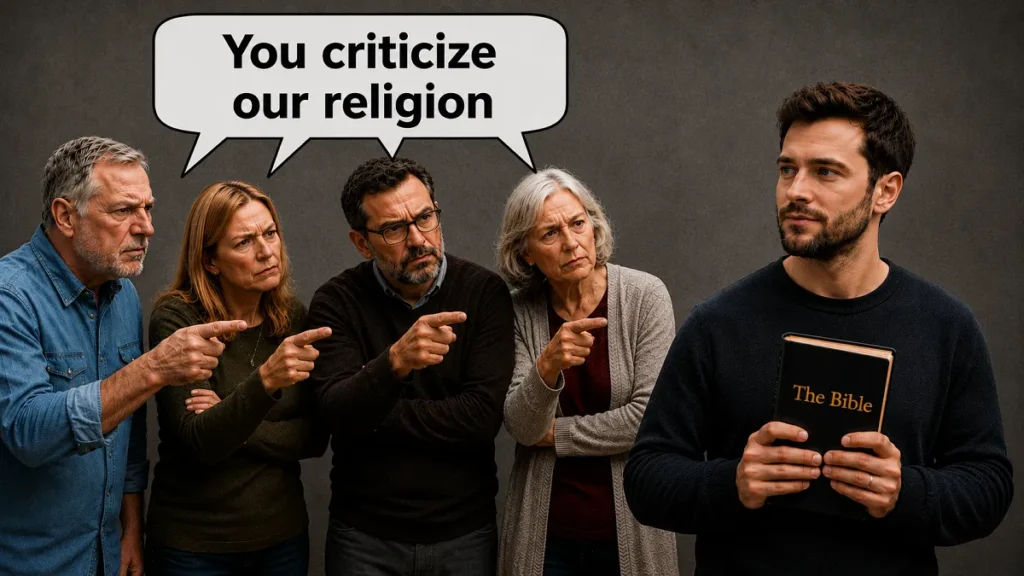
If you belong to a church or denomination, you may also encounter opposition from within it. This may happen when you begin studying the Bible for yourself and questioning the teachings of the denomination to which you belong. Some may feel that you have become critical or that you are opposing them. But always turn to God for help and guidance in your search.
Pray as the psalmist prayed:
“Hear my prayer, Yahweh… Teach me to do Your will; for You are my God; Your Spirit is good; lead me into the land of justice.” (Psalm 143:1, 10, Interlinear Bible)
If you sincerely want to know the faith that God approves, He will hear you.
Faith should not be based on what you have been told. It should be based on what is written.
So take out your Bible – and begin to examine your faith.
Related Articles
Explore More
© 2026 Skriften.dk