What Is the Kingdom for Israel?
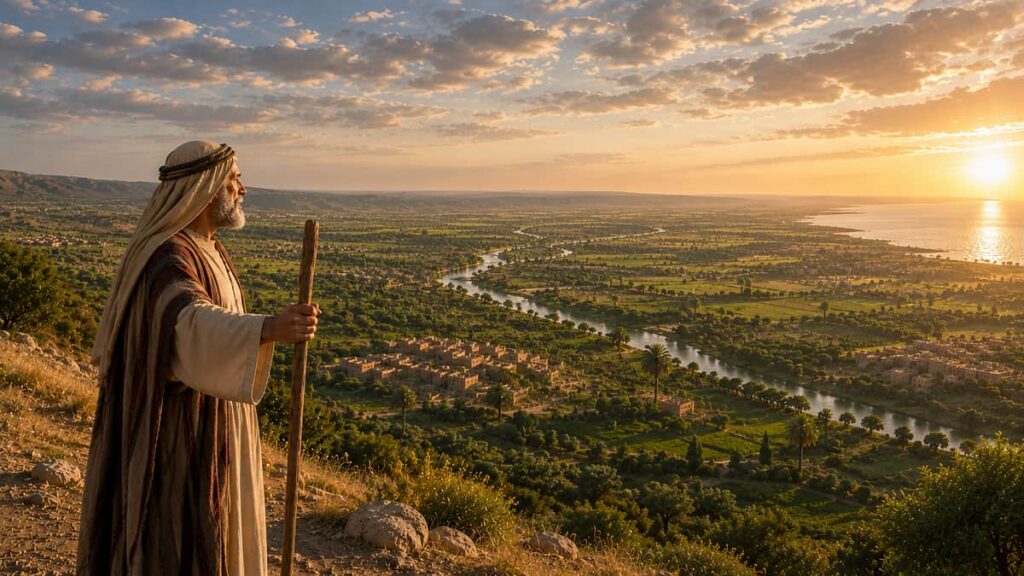
The Kingdom for Israel has its beginning in a promise that God made to Abraham about 4,000 years ago. As Abraham stood looking out over the land of Canaan, God said to him:
“Lift up your eyes and look northward and southward and eastward and westward from the place where you are. For all the land which you see I will give to you, and to your seed forever.” (Genesis 13:14–15, Interlinear Bible)
Later, it was revealed that kings would descend from Abraham and that his descendants would become the nation of Israel.
But what exactly is the Kingdom for Israel? Is it the same as the Kingdom of God? Has God rejected Israel, or will he still fulfill the promises he made to Abraham, Isaac, and Jacob?
To answer these questions, we must examine what Scripture says.
God’s Promise to Abraham
It was Abraham’s descendants through his son Isaac who were to inherit this land (Genesis 17:19, 21). These descendants later became the people of Israel, a nation consisting of twelve tribes. It was this nation that God chose from among all the peoples of the earth to be his own special people and to whom he gave his covenants and promises.
Notice that God gave the promise to Abraham without attaching conditions to the promise itself. The land in question was the land of Canaan—the land that today is called Palestine. This land was to belong to Abraham’s descendants through Isaac.
The question, therefore, is not merely what God promised, but whether God will fulfill what he has promised. Concerning God’s faithfulness, Scripture says:
“God is not a man, that he should lie, or a son of man, that he should change his mind. Has he said it and not done it? Has he spoken and not fulfilled it?” (Numbers 23:19, Interlinear Bible)
“So shall My word be, which goes out of My mouth; it shall not return to Me void, but it shall accomplish that which I please, and it shall prosper in what I sent it to do.” (Isaiah 55:11, Interlinear Bible)
“He has given food to those who fear him; forever he will remember his covenant.” (Psalm 111:5, Interlinear Bible)
Scripture emphasizes again and again that God is faithful to his promises and covenants. The question of Israel’s future is therefore ultimately a question of God’s faithfulness. If God does not fulfill what he promised Abraham, how can we trust his other promises? On the contrary, the Bible shows that God remembers his covenant and brings to completion what he has promised.
What Is the Kingdom for Israel?
God’s promise concerning the land was not given only to Abraham. It was later confirmed to his son Isaac:
“Stay in this land, and I will be with you and bless you, for to you and to your seed I will give all these lands. And I will cause to rise my oath which I swore to your father Abraham. And I will increase your seed like the stars of the heavens, and I will give to your seed all these lands. And all the nations of the earth shall bless themselves in your seed.” (Genesis 26:3–4, Interlinear Bible)
Later, the promise was also given to Jacob, Isaac’s son:
“I am Yahweh the God of your father Abraham, and the God of Isaac; the land on which you are lying, I will give it to you and to your seed.” (Genesis 28:13, Interlinear Bible)
Gradually, God revealed more of his purpose. The people of Israel were not only to inherit the land; they were also to have a kingdom. When the time came, God chose David to be king over Israel. It was not the people who chose him, but God himself (Acts 13:22).
David was from the tribe of Judah and was described as a man after God’s heart. With him, God made a special covenant concerning the kingdom:
“And your house shall be established, and your kingdom before you forever. Your throne shall be established forever.” (2 Samuel 7:16, Interlinear Bible)
The Kingdom for Israel was therefore the kingdom that God established among the twelve tribes of Israel. Jerusalem became its capital, and David’s line received the promise of an everlasting royal throne. When the Bible later speaks of the restoration of the Kingdom to Israel or of David’s fallen tent, it is David’s kingdom that is in view.
The Kingdom for Israel Is Overthrown
God brought Israel out of Egypt, made a covenant with them, and gave them his law. He gave them the land of Canaan and showed them his favor time and again. But the people of Israel repeatedly turned away from God, worshiped idols, and rejected his commandments. Therefore, God sent his prophets to warn them of the consequences of their unfaithfulness.
The prophet Moses had long before foretold that calamity would come upon Israel if the people turned away from God:
“For I know that after my death you shall utterly corrupt yourselves, and will turn aside from the way which I have commanded you. And evil shall happen to you in the latter end of the days because you shall do evil in the eyes of Yahweh, to make Him angry with the work of your hands.” (Deuteronomy 31:29, Interlinear Bible)
When Israel continued in disobedience, God allowed the curses Moses had spoken of to come upon the nation (Deuteronomy 29:9–27). Shortly before David’s kingdom was overthrown, God declared through the prophet Ezekiel:
“Ruin, ruin, ruin! I will appoint it! Also this shall not be until the coming of Him to whom is the right, and I will give it.” (Ezekiel 21:27, Interlinear Bible)
Israel’s unfaithfulness eventually became so great that God allowed the Babylonian king Nebuchadnezzar to come against Jerusalem with his army. The city was destroyed, the temple was burned, and King Zedekiah was taken away to Babylon (2 Kings 25:1–10).
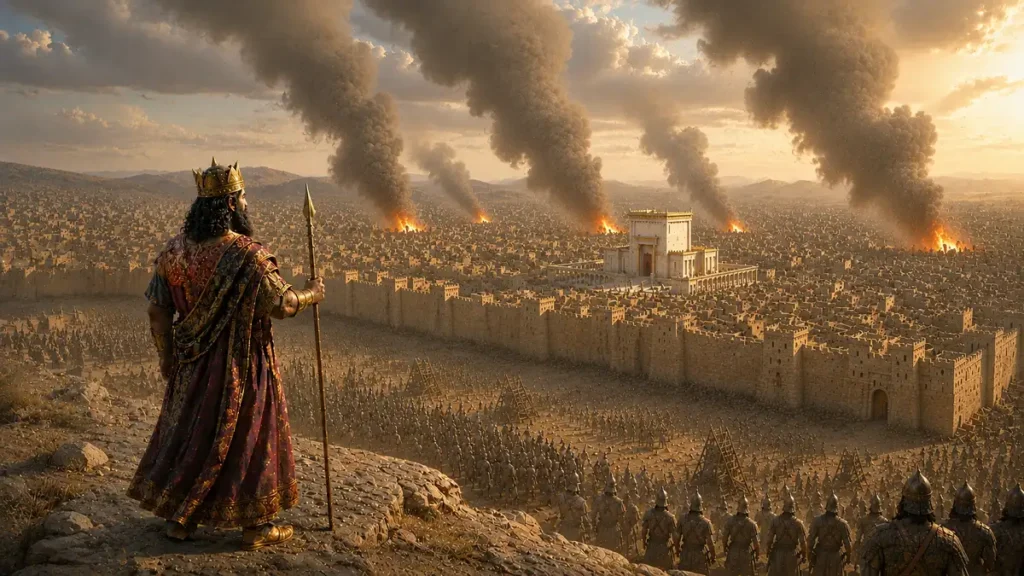
With the destruction of Jerusalem in 587 BC, David’s kingdom was overthrown. God used the Babylonian king Nebuchadnezzar as his instrument to bring this judgment upon Israel. Although Jerusalem was later rebuilt under Nehemiah, David’s kingdom was not restored. Israel remained subject to foreign world powers—first Babylon, then the Persian Empire, followed by Greece, and finally the Roman Empire.
Since the fall of David’s kingdom, no king has sat on David’s throne in Jerusalem.
Israel Left to Itself
When Yahweh sent his Son to Israel, he was met with the same opposition that God’s prophets had faced before him. In the end, he was rejected and put to death. In doing so, the nation brought to completion the pattern of resistance to God and his messengers that had characterized its history for centuries.
“Jerusalem, Jerusalem, the one killing the prophets and stoning those sent to her. How often I desired to gather your children in the way a bird gathers her chicks under her wings! And you did not desire it.” (Matthew 23:37–38, Interlinear Bible)
In Jesus’ day, Israel was still without a king from the line of David. The nation was subject to the Roman Empire, and many hoped that the Messiah would deliver them from Roman rule and restore Israel’s greatness. But when Jesus came, most of the nation’s leaders rejected him and refused to accept him as the promised Messiah. Jesus therefore warned that another judgment would come upon Jerusalem. Just as the city had previously been destroyed by Babylon because of the people’s disobedience, it would once again face destruction.
“And going out, Jesus left the temple. And His disciples came to show him the buildings of the temple. But Jesus said to them: Do you not see all these things? Truly I say to you: There will not at all be left one stone on a stone which in no way will not be thrown down.” (Matthew 24:1–2, Interlinear Bible)
Because of the people’s wickedness, God withdrew his protection, and Jerusalem was to be destroyed and the temple left desolate.
This judgment was fulfilled in AD 70, when the Roman army under Titus destroyed Jerusalem and the temple.
But does this mean that God rejected his people Israel?
Has God Rejected His People Israel?
Some quickly conclude that God must have rejected his people Israel because Jesus said that their house would be left desolate and that the Kingdom of God would be taken away from them (Matthew 21:43). But we have already seen that God gave Abraham an unconditional promise and that Scripture repeatedly emphasizes God’s faithfulness. What, then, does the Bible say directly about the question: Has God rejected his people Israel?
Paul writes in Romans:
“I ask then: Has God rejected his people? May it not be! For I also am an Israelite, of the seed of Abraham, of the tribe of Benjamin. God has not rejected his people whom he foreknew.” (Romans 11:1–2, Interlinear Bible)
Paul gives a clear answer: God has not rejected his people. But this is not the only place where Scripture says this. Through the prophets, God repeats the same promise.
“Thus says Yahweh, who gives the sun for light by day and the statutes of the moon and the stars for light by night, who stirs up the sea so that its waves roar. Yahweh of hosts is his name: If these statutes depart from before me, says Yahweh, then the seed of Israel also shall cease from being a nation before me forever. Thus says Yahweh: If the heavens above can be measured, and the foundations of the earth below can be searched out, then I also will reject all the seed of Israel for all that they have done, says Yahweh.” (Jeremiah 31:35–37, Interlinear Bible)
“Have you not noticed what this people has spoken, saying: The two families whom Yahweh chose, he has also rejected? Thus they despise my people, so that they are no longer a nation before them. Thus says Yahweh: If my covenant with day and night does not stand, and if I have not appointed the statutes of heaven and earth, then I will also reject the seed of Jacob and David my servant, so that I will not take from his seed rulers over the seed of Abraham, Isaac, and Jacob. For I will restore their captivity and have compassion on them.” (Jeremiah 33:24–26, Interlinear Bible)
God, then, has not rejected his people Israel. Just as surely as the sun, moon, and stars continue in their courses, so surely will God not reject the seed of Jacob. And just as surely, he will not revoke the promise concerning David’s royal line.
Although God allowed Jerusalem and the temple to be destroyed, and although the nation has been subject to foreign powers for long periods, Scripture shows that his promises still stand. The prophecies therefore point forward to a time when David’s kingdom will once again be restored.
Jesus Will Restore the Kingdom for Israel
Jesus did not speak only about salvation for the nations. He also spoke about a future restoration of Israel. He said to his disciples:
“And Jesus said to them: Truly I say to you: You who have followed me, in the restoration, when the Son of Man sits on the throne of his glory, you also shall sit on twelve thrones, judging the twelve tribes of Israel.” (Matthew 19:28, Interlinear Bible)
Here Jesus assumes that the twelve tribes of Israel will once again have their place in God’s plan. This agrees with Isaiah’s prophecy:
“It is too small a thing that you should be my servant to raise up the tribes of Jacob and to bring back the preserved of Israel; I will also make you a light to the nations, that you may be my salvation to the end of the earth.” (Isaiah 49:6, Interlinear Bible)
God’s servant, Jesus Christ, will not only be a light to the nations. He will also raise up the tribes of Jacob and bring back the preserved of Israel.
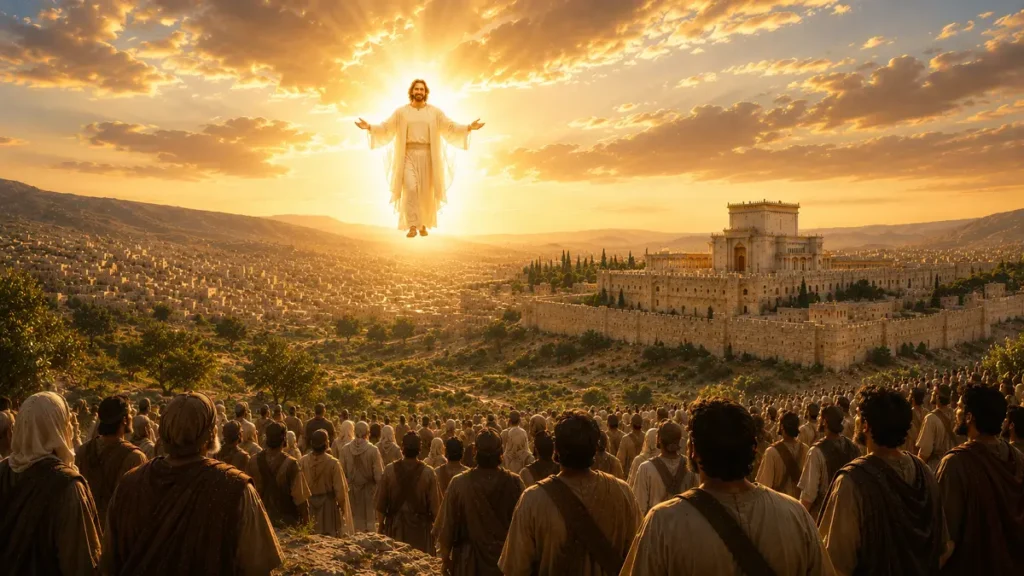
This restoration is also spoken of by the prophet Amos:
“In that day I will raise up the fallen tent of David, and I will wall up its breaches. And I will raise up its ruins and rebuild it as in the days of old, that they may possess the remnant of Edom and all the nations over whom my name is called, says Yahweh, who does this.” (Amos 9:11–12)
David’s fallen tent is a picture of David’s kingdom, which was overthrown with the fall of Jerusalem. God promises that this kingdom will be rebuilt “as in the days of old.”
The same promise is repeated in Acts:
“After these things I will return, and I will rebuild the fallen tabernacle of David; its ruins I will rebuild, and I will raise it up again.” (Acts 15:16, Interlinear Bible)
After his resurrection, the disciples therefore asked Jesus:
“When they therefore had come together, they asked him, saying: Lord, is it at this time that you are restoring the kingdom to Israel? He said to them: It is not for you to know times or appointed seasons which the Father has set by his own authority.” (Acts 1:6–7, Interlinear Bible)
Jesus did not reject the disciples’ expectation of a restoration of the kingdom to Israel. He simply said that the timing belonged to the Father.
The word restore itself is significant. It is a translation of the Greek word apokathistaneis, which means to restore something to its former condition (Exegetical Dictionary of the New Testament, Horst Balz & Gerhard Schneider, 1990, vol. 1, p. 129).
This is therefore not about establishing a new kingdom, but about restoring something that had previously existed. The disciples did not ask Jesus whether he would establish a new kingdom for Israel, but whether he would restore the kingdom that had previously existed under the line of David. This agrees with the prophecies concerning David’s fallen tent, which God promised to rebuild. Nor did the disciples ask about the establishment of the Kingdom of God, but about the restoration of the kingdom to Israel. This shows that two different kingdoms are in view.
An Earthly Kingdom—Not the Kingdom of God
Other prophecies also show that an earthly kingdom is in view. The prophets do not speak of a heavenly Jerusalem, but of Jerusalem, the people of Israel, and the land that God promised to Abraham.
Isaiah speaks of the day when God will once again comfort his people and speak peace to Jerusalem:
“Comfort, comfort my people, says your God. Speak to the heart of Jerusalem and call to her that her warfare is fulfilled, that her iniquity is pardoned; for she has received double from the hand of Yahweh for all her sins.” (Isaiah 40:1–2, Interlinear Bible)
Jeremiah goes even further and describes how Jerusalem will be built again. He mentions specific locations and city gates that make sense only if the earthly city of Jerusalem is in view:
“Behold, days are coming, says Yahweh, when the city shall be built for Yahweh from the Tower of Hananel to the Corner Gate. And the measuring line shall again extend farther to the hill of Gareb and turn toward Goah. And the whole valley of the dead bodies and the ashes, and all the fields as far as the brook Kidron, to the corner of the Horse Gate toward the east, shall be holy to Yahweh. It shall never again be uprooted or torn down forever.” (Jeremiah 31:38–40, Interlinear Bible)
Both prophecies refer to specific places, Jerusalem, and the seed of Jacob. They therefore point to a future restoration of Israel’s national kingdom, not to the establishment of the Kingdom of God.
Israel’s History Testifies to God’s Faithfulness
Since David’s kingdom was overthrown in 587 BC, Israel has been without a king from the line of David. And since the destruction of Jerusalem and the temple in AD 70, the Jews have lived without a temple, priestly service, and sacrifices, just as the prophets foretold (Hosea 3:4; Ezekiel 21:30–32; Matthew 24:1–2). Yet they have been preserved as a distinct people among the nations of the world.
It is remarkable that a people who lived scattered among other nations for about 1,900 years without a homeland of their own nevertheless preserved their identity. Throughout history, many peoples have been absorbed into other cultures or have disappeared altogether. The Jews, by contrast, preserved their national identity even though they lived scattered across large parts of the world.
When the State of Israel was established in 1948, the Jews once again had a national homeland. They did not, however, regain David’s kingdom. The State of Israel is a parliamentary democracy, not the kingdom that the Bible calls the Kingdom for Israel.
For many Christians, this is a testimony to God’s faithfulness to the promises he made to Abraham, Isaac, Jacob, and David.
The return of Jews to their ancient homeland has therefore attracted great interest among Christians. Many view these events in light of the Bible’s prophecies concerning Israel’s future restoration. However, it is not modern history that forms the basis for this expectation, but the promises God himself gave through his prophets. History may be remarkable, but Scripture is the final authority.
More Scriptures About Israel’s Restoration
If you would like to examine the subject further, there are many more passages that speak about God’s relationship with Israel and its future restoration. The following overview can serve as a starting point for further Bible study.
The Books of Moses
Leviticus 26:44–45.
Deuteronomy 4:31; 30:3–10.
Historical Books
1 Samuel 12:22.
2 Samuel 7:24.
Psalms
Psalms 14:7; 69:36–37; 89:4–5, 34–38; 94:14; 105:7–11.
The Prophets
Isaiah 11:1–16; 14:1–2; 27:6, 12–13; 41:8–9; 44:21; 49:6, 14–26; 55:3; 61:4–9.
Jeremiah 16:14–15; 23:1–8; 24:5–7; 30:1–24; 31:1–40; 32:37–44; 33:6–26.
Ezekiel 11:16–20; 20:33–40; 28:24–26; 34:11–31; 36:1–38; 37:1–28; 39:21–29.
Hosea 2:2, 20; 3:4–5; 11:8–11; 14:5–10.
Amos 9:11–15.
Micah 2:12–13; 5:1–8.
Zephaniah 3:12–13, 17–20.
Zechariah 8:7–8, 13; 9:16; 10:3–12.
The Greek Scriptures
Acts 15:16.
Romans 11:1–2, 25–29; 15:8.
Hebrews 8:7–13.
Brief Summary
We have now seen that the Kingdom for Israel was the kingdom that God established among the twelve tribes of Israel and gave to the line of David. Although the kingdom was overthrown because of Israel’s disobedience, Scripture shows again and again that God has not rejected his people.
The prophets speak of a future restoration of Israel, Jerusalem, and David’s throne. Jesus’ disciples also expected this restoration, and Jesus did not reject their expectation. On the contrary, Scripture shows that God will still fulfill the promises he made to Abraham, Isaac, Jacob, and David.
God gave Abraham an unconditional promise that his descendants through Isaac would be his people and inherit the land of Canaan forever. This promise will be fulfilled even though Israel as a people was disobedient to God. God’s promises depend on his faithfulness and cannot be made void by human disobedience.
According to the words of the prophets, Israel therefore awaits a future restoration. God is faithful to his covenants and does not reject the people whom he foreknew.
Related Articles
Explore More
© 2026 Skriften.dk